How to Remove Tough Oven Grease Before an End-of-Lease Inspection – Leaving a rental premises requires a comprehensive cleaning checklist, but one thing that may determine whether you get the whole bond refunded is the state of your oven. Typically, property managers and landlords examine the state of the oven to assess its maintenance. However, you can easily make your oven immaculate with some tricks, which will save you much time spent on cleaning.
If you are getting ready for an inspection at the end of your lease, this article will teach you how to clean your oven to make it clean enough for the inspection.
Why Is It so Important to Clean Your Oven for an End-of-Lease Inspection?
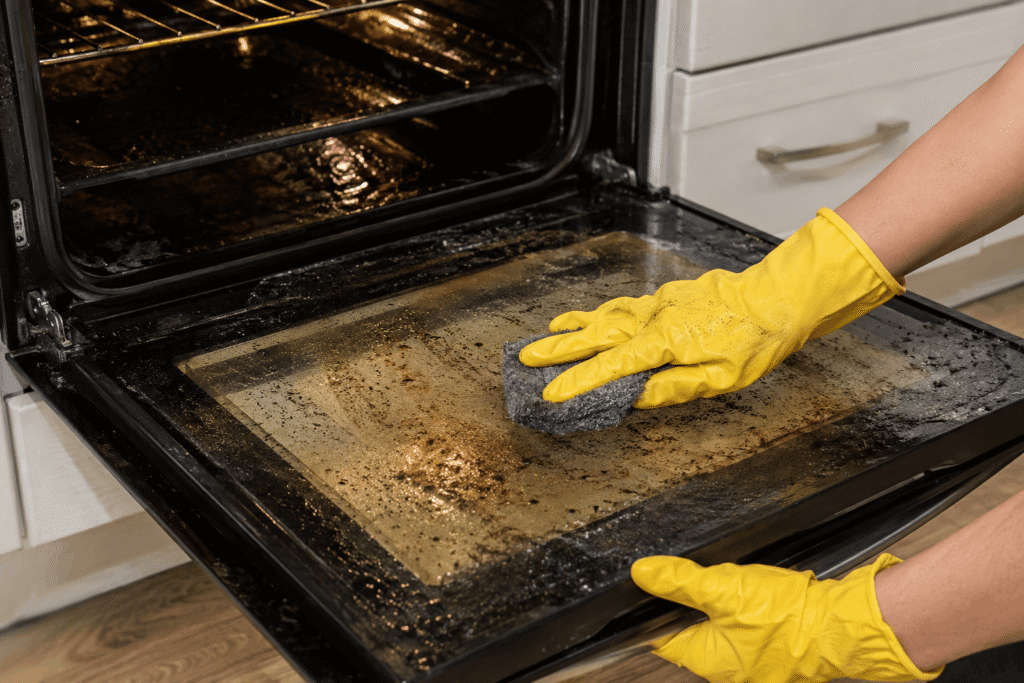
The kitchen is the room that gets more attention during bond cleaning and end-of-lease cleaning. One of the main appliances, which undergoes closer examination, is the oven due to the accumulation of grease and burnt food. Even a slight contamination may lead to cleaning charges.
While a clean oven will help you get your full bond back, it will also leave you in good standing at the final property inspection.
Gathering the Cleaning Products
To get started, make sure to have these products:
- Baking soda
- White vinegar
- Dishwashing detergent
- Warm water
- Spray bottle
- Microfiber towels
- Non-abrasive scrubbing pad
- Plastic scraper
- Rubber gloves
- Oven cleaner (for greasy messes)
Preparation will help to make the cleaning process easier and more effective.
Step 1: Detach Oven Racks
Remove all detachable components, such as the oven racks and any trays. Soak them in hot water containing dish soap for at least 30-60 minutes. To aid in breaking down grease, it’s beneficial to add baking soda to the soaking solution.
Step 2: Create Baking Soda Paste
To use a natural method to clean oven grease, prepare a baking soda paste by mixing some baking soda with a little water.
Apply the paste throughout the interior walls, the floor of the oven, and the inside of the door. Make sure not to cover the heating elements with the paste. The paste should be left to rest overnight or at least 8-12 hours to soften the grease.
Step 3: Scraping the Burnt Grease
After the paste has done its job, you can scrape off the loosened grease and burnt food particles with the help of a plastic scraper.
Metal tools should be avoided because they could damage the enamel surface of the oven.
Use a wet microfiber towel to wipe off the residue.
Step 4: Spray White Vinegar
Pour some white vinegar into a spray bottle and use it to coat the remaining baking soda residue.
The bubbling action aids in dissolving tough grease residues and cleaning up any leftover residue. Wipe the whole area clean with a damp towel.
Step 5: Cleaning the Oven Door
The grease splatters get collected on the oven door very frequently.
Use the same paste of baking soda or degreaser on both sides of the glass surface.
Leave it there for a few minutes, then scrub the glass with a soft sponge and rinse it off with a microfiber cloth to polish.
Step 6: Deep Clean Oven Racks
Scrub the racks after soaking, using either a sponge or a soft brush.
To tackle greasy spots, apply baking soda straight to the spots before scrubbing.
Make sure to rinse the racks thoroughly and leave them completely dry before putting them back in the oven.
Step 7: Employ Commercial Oven Cleaner for Grease Deposits
If the above natural ways are not enough to remove the grease, then a commercial oven cleaner will come in handy.
Ensure you do the following:
- Wear rubber gloves
- Ventilate your home – open the windows
- Read the directions on the product carefully
- Remove all traces of the cleaner before using the oven
Commercial cleaners work especially well on greasy ovens that have never been cleaned for several months.
Don’t Forget About Those Areas
When cleaning the inside part of the oven, many renters forget to check these places:
- Oven door gasket
- Control switches
- Handle
- Oven surface
- Oven vents
- Storage drawer at the bottom of the oven
- Filters in ranghood
Property owners tend to check those places when conducting an end-of-lease cleaning, as grease tends to accumulate there.
Tips to Simplify Oven Cleaning
- Tidy spills when your oven is still warm, but not hot.
- Put oven-safe dishes under your oven to collect spills
- Scrub the interior once a month to avoid grease accumulation.
- Do not let burned food remain in the oven after baking.
- Deep clean your oven before the grease hardens over time.
These tips save you time in the process of cleaning before your next inspection.
Conclusion
Getting your oven ready for the end-of-lease inspection is one of the wisest things that you can do to maximize your chances of getting back your bond in full. Using the right cleaning techniques, it is possible to get rid of any stubborn grease from your oven.
Looking for a stress-free way of moving out? The Bond Cleaning Brisbane provides end-of-lease cleaning services that will make it easy for you to move out of your rental property in good condition.
FAQs
How much time does it take to get rid of the stubborn oven grease?
It takes overnight to dissolve the grease when using a paste of baking soda. Professional cleaners require around 20 to 60 minutes.
Will baking soda do for a very greasy oven?
Baking soda does an excellent job of cleaning any amount of grease and burnt food leftovers. If your oven is extremely dirty and has been neglected for several years, then it might require a professional cleaner or repeated cleaning.
Will a dirty oven affect my bond?
Yes, of course. A dirty oven is one of the most common problems that leads landlords to request additional cleaning services or reduce the bond money at the end of the inspection.
Should I clean the oven on my own or hire professionals?
In case the grease deposits are minimal, doing the job myself will be cost-effective. Nevertheless, in the case of greasy ovens or when time is scarce, hiring professionals for bond cleaning will be of great help.
What should I not do when cleaning the oven?
Don’t use steel wool or any sharp metal scrapers, which will scratch the enamel of your oven. Moreover, you shouldn’t combine chemical cleaners without permission of the producer.