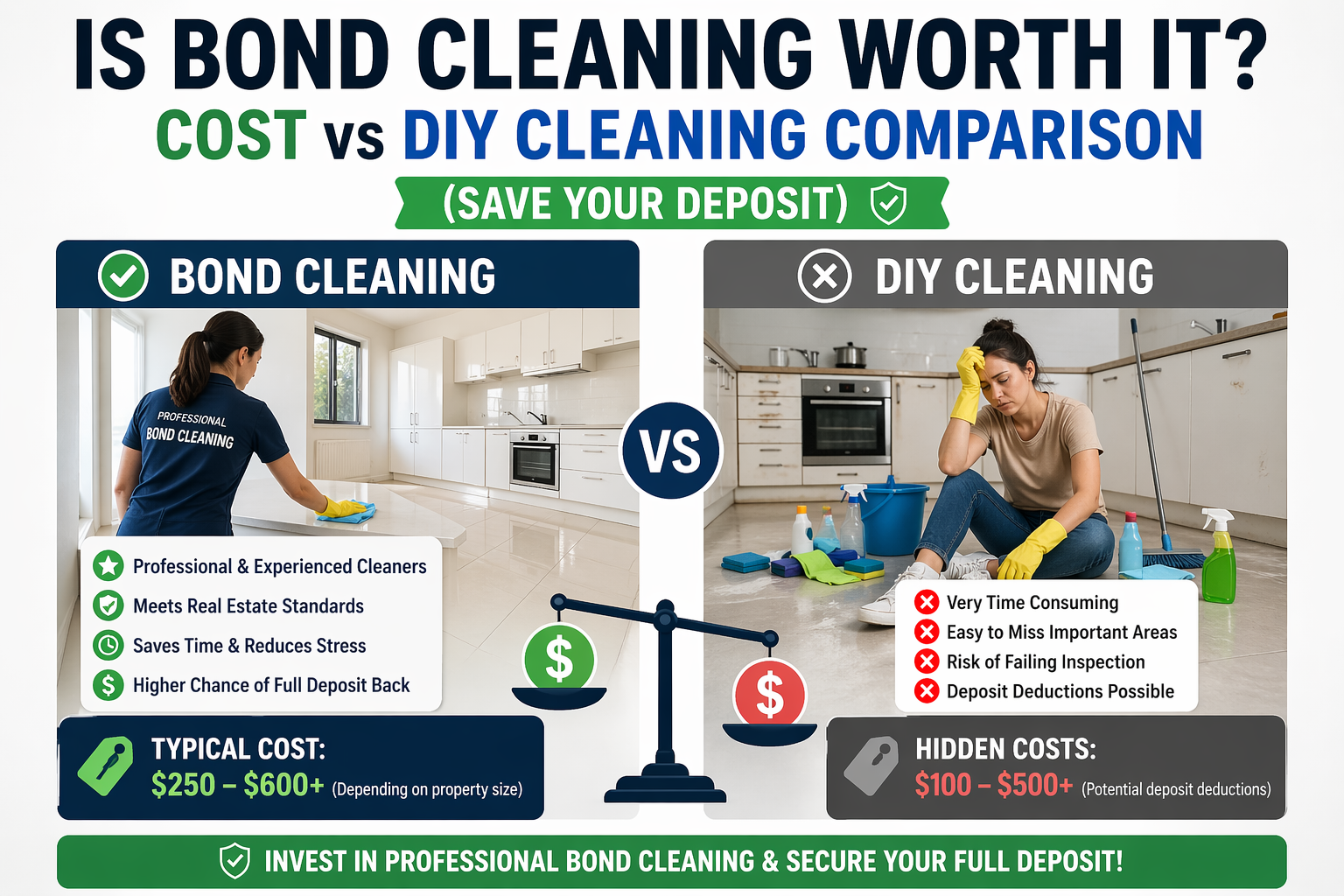
Getting out of a rented house in Brisbane requires more than moving boxes and dusting surfaces. End-of-lease cleaning is important, but inappropriate mixing of cleaning chemicals poses risks ranging from toxic gases to surface damage and possible health threats.
Why understanding product mix-ups is important when you need to do some move-out cleaning yourself: knowing how to use different cleaning products in combinations that are not dangerous will help you clean kitchens, bathrooms, and floors safely. Rule of thumb: never mix products unless the manufacturer advises you to do so.
5 Cleaning Product Combinations You Should Not Mix During Bond Clean
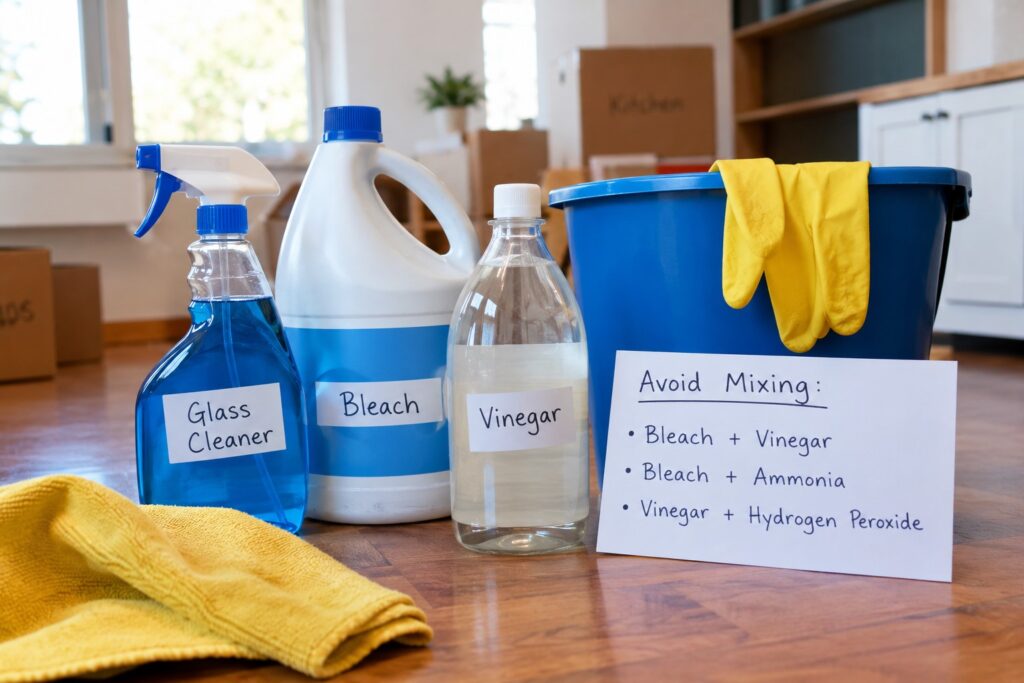
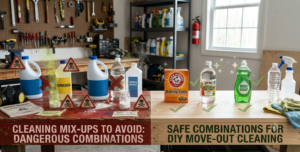
Certain cleaning agents contain chemicals whose interaction produces dangerous results. Here are 5 of the most dangerous product combinations for your end-of-lease cleaning.
| Cleaning Products | Potential Danger | Safer Alternative |
| Bleach + Vinegar | Releases toxic chlorine gas | Use one suitable cleaner at a time |
| Bleach + Ammonia | Produces dangerous chloramine gases | Use a labelled, ammonia-free alternative |
| Bleach + Rubbing Alcohol | Can produce toxic compounds, including chloroform | Clean separately with a suitable product |
| Vinegar + Hydrogen Peroxide | Can form corrosive peracetic acid | Never combine in the same container |
| Drain Cleaner + Another Cleaner | May cause heat, splashing, or toxic fumes | Follow the drain cleaner’s label |
1. Bleach + Vinegar
Mixing bleach and vinegar produces chlorine gas, which causes irritation to the eyes, throat, and lungs. Particularly harmful in small bathrooms and laundry rooms.
Safe method: Stick to one cleaner and follow the instructions on the label. Do not add vinegar to bleach-based cleaner.
2. Bleach + Ammonia
Ammonia is found in glass cleaners and many other cleaning products. Mixing these with bleach releases toxic gas, which causes problems like coughing and difficulty breathing.
Safe practice: Be sure to read all labels before cleaning windows, mirrors, toilets, or kitchen areas since mixing any products will be risky.
3. Bleach and Rubbing Alcohol
Bleach mixed with rubbing alcohol can produce dangerous chemicals like chloroform. This is an avoidable practice while trying to clean stains.
Safe practice: It is better to use one product at a time in order to properly clean the surface.
4. Vinegar and Hydrogen Peroxide
Though both products are used for cleaning, mixing them in one bottle results in the production of peracetic acid, which is an irritant and corrosive chemical.
Safe practice: It is wise to keep the products separate from each other and use them following instructions.
5. Drain Cleaners and Other Cleaning Products
Drain cleaners may contain highly reactive chemicals. Mixing bleach, vinegar, or another cleaner with it can cause dangerous reactions, heat, or splashes.
Approach Safely: Only employ the suggested drain solution. Should it prove ineffective, then go through the manufacturer’s guidelines on how to try another technique.
Safe Mixtures of Chemicals for DIY Bond Cleaning
One cleaning solution is usually enough to perform the vast majority of cleaning tasks. Additionally, you can use basic cleaning techniques without mixing chemicals.
- Warm water and dishwashing soap: Perfect for cleaning many washable surfaces, provided they are compatible with such cleaning solutions according to their manufacturer.
- Water and baking soda: It can be useful to make a mild paste for some difficult stains. First, test an inconspicuous spot.
- A suitable floor cleaner and water: Always read the label for dilution and compatibility instructions.
Note that just because something is natural, it does not mean that it is safe to mix. Never mix any cleaning products to increase their power.
Important Tips Regarding Mixing Cleaning Chemicals
Please pay attention to the following tips while preparing your rental premises for the final inspection:
- 1. Read all labels: Ingredients, warnings, dilution instructions, surface compatibility.
- 2. Ventilate the property: Open windows and doors, where possible.
- 3. Use protective gloves: Ensure all other protective gear recommended by the manufacturer is used.
- 4. Maintain products in their original containers: Never pour chemicals into unlabeled bottles.
- 5. Clean surfaces separately: Never apply two chemicals on the same surface without rinsing in accordance with the necessary guidelines.
- 6. Proper storage of chemicals: Ensure chemicals are kept away from children, animals, food, and incompatible products. In case you combine chemicals and detect strong fumes, move out of the room quickly. Do not neutralize the mixture or continue cleaning.
Do not ignore the situation in case of breathing problems or other symptoms. Seek help if it is needed.
Importance of Chemical Safety in Bond Cleaning Process
The process of bond cleaning should be not only about cleaning but also about being careful. Chemical reactions can cause damage to benchtops, tiles, grout, glass and other rental fixtures.
Using the Brisbane bond cleaning checklist will make sure that you clean the kitchen, bathroom, oven, cupboards, windows and floor areas without putting any unnecessary chemicals in use.
In relation to workplace chemical safety, Safe Work Australia also notes the significance of identifying hazards, safe handling, storing, and emergency measures.
Conclusion
If you follow proper cleaning techniques, read product labels, and always put safety first, you will be able to keep yourself healthy, prevent damage to surfaces, and ensure that your rental place is ready for the final inspection. A carefully planned end-of-lease clean may help you to avoid the possibility of cleaning dispute related to your bond.
Moving out? Let professionals help you with your end-of-lease cleaning at The Bond Cleaning Brisbane. Visit the website and learn about the company and available services. Make your next move easy and stress-free by leaving the cleaning to the experts while you are settling into your new home.
FAQs
Which cleaning products should never be mixed?
Avoid mixing bleach with vinegar, ammonia, or rubbing alcohol. Do not use hydrogen peroxide with vinegar together; do not mix drain cleaners with other cleaning products.
Is vinegar and baking soda safe for move-out cleaning?
These two products can be combined in some cleaning instances, but the reaction causes the formation of carbon dioxide and limits the efficiency of both substances. Combining them individually is a better idea in most cases.
Is it possible to combine various bathroom cleaners?
No. Various bathroom cleaners might include different and incompatible chemicals. It is recommended to use only one product at a time.
What will I need to do if I mistakenly mix cleaning products?
You will need to leave the contaminated room and avoid inhaling the fumes. Do not attempt to neutralize the mixture or use other chemicals. You should seek medical attention immediately.
Are homemade cleaning products good enough for bond cleaning in Brisbane?
Yes. It is easy to conduct various cleaning tasks by yourself. But sometimes you will have to apply some special products to deal with cleaning difficulties such as oven grease, mold, and accumulated dirt. Always inspect your tenancy cleaning needs and the condition of every surface.