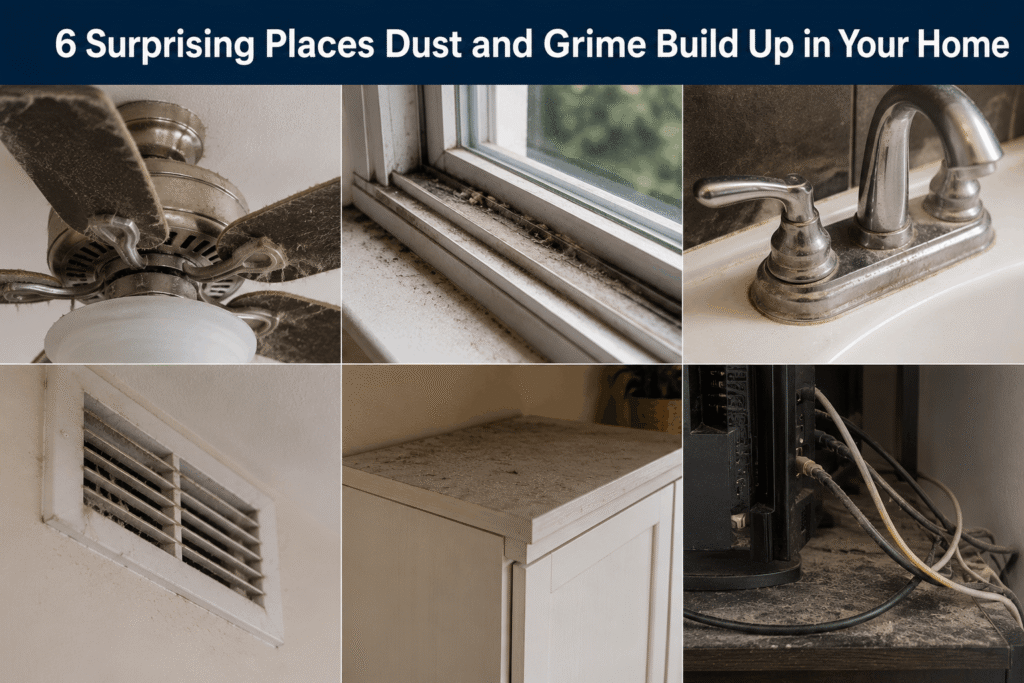
6 Surprising Places Dust and Grime Build Up in Your Home – You have swept the floors, wiped the countertops, and dusted the shelves, but you may still not feel like your home is fresh. Why? Because dust and dirt can accumulate in spots that can easily be overlooked. Spots where dust, hair, grease, cobwebs, and other dirt can collect for weeks or even months at a time.
Want to know how to get a fresher home? Check out 6 places that dust and dirt love to hide in your home-and what you need to do to keep them clean.
1. Behind and Beneath Large Appliances
Areas behind your fridge, washing machine, dishwasher, and stove have all the opportunities to harbor dust, crumbs, animal hair, and all sorts of grime. Since it is quite hard to reach, it can stay untouched while you are cleaning.
Also, dust found behind your appliances could get mixed with moisture or grease, which results in even more persistent deposits. Therefore, it is highly recommended to clean behind and under appliances as part of your deep cleaning regimen.
Cleaning Tip: Make sure that you unplug your electrical appliances if possible and safe, and use either a vacuum crevice tool or a long-handle microfiber duster to remove the dust.
2. Ceiling Fans and Light Fittings
Looking up, you may find out about another huge source of dust accumulation in your home. Fan blades circulate air in a room, making dust particles fall onto their surfaces. Moreover, light fittings, lampshades, and ceiling fixtures can gather plenty of dust as well.
Regular cleaning of ceiling fans will prove to be especially beneficial since all that accumulated dust will be distributed through the room once you start the fan.
Cleaning Tip: Turn off the ceiling fan and dust it using either a microfiber duster or a pillowcase to make sure that dust does not end up in other places in your house.
3. The Tops of Door Frames, Cupboards, and Tall Pieces of Furniture
The top surfaces of door frames, kitchen cupboards, wardrobes, bookshelves, etc., are surprisingly good at gathering dust. This is because these surfaces are usually higher than eye level and thus are forgotten about during home cleaning.
As time progresses, the dust in kitchen areas may also combine with grease from the air, forming an adhesive layer. Tops of doorways and tall pieces of furniture are also considered to be overlooked cleaning spots.
Cleaning Tip: A telescopic microfiber duster should be used for high areas. In greasy places, a subsequent cleaning using a suitable wetted cloth and cleaner should be done.
4. Underneath Sofas, Beds, and Other Furniture
When you vacuum near your sofa or bed, it doesn’t mean that the area underneath is clean, since dust, lint, hair, and other particles accumulate under the furniture due to the circulation of air in these areas.
It is especially obvious in households with pets, children, or a lot of upholstered furniture.
Cleaning Tip: Flat microfiber dusters or vacuum attachments that can reach under furniture should be used. If possible, move light furniture from time to time for a more thorough cleaning.
5. Window Tracks, Blinds and Sliding Door Channels
Your windows could be cleaned frequently without you remembering that you have to attend to the tracks and channels surrounding them. These small areas tend to accumulate dust, dead insects, hair, and any other dirt from outside. Blinds also manage to accumulate some dust between their slats.
Dirty window tracks can ultimately become hard to open and close, while the accumulation of debris will make your otherwise clean room look untidy.
Cleaning Tip: Firstly, vacuum out loose debris, and then use a brush or damp cloth to clean the tracks and corners. When cleaning window blinds, do it gently from top to bottom.
6. Bathroom Exhaust Fans and Vent Covers
A bathroom vent system works to ventilate the room, but at the same time, they tend to catch airborne dust. Exhaust fan blades and covers may become gradually covered in dust and grime, and your bathroom cleaning procedure will be less effective because of that.
Exhaust fans in your bathroom can accumulate dust due to drawing air through the room.
Cleaning Tip: Turn off the fan before cleaning. Remove the cover only if it is okay by the manufacturer, then remove any loose dust using a vacuum, and clean the cover separately. Remember to allow everything to dry thoroughly before reattaching the cover.
Quick Guide for Areas That Collect Hidden Dust and Grime
| Hidden Areas | Common Buildup | Cleaning Solution |
| Behind Appliances | Dust, hair, and crumbs | Vacuum and crevice tool |
| Ceiling Fans | Dust and pet hair | Microfiber duster or pillowcase |
| Cabinet Tops | Dust and grease | Long duster and wet cloth |
| Under Furniture | Lint, hair, and dust | Flat duster or vacuum |
| Window Tracks | Dirt, bugs, and debris | Vacuum and small brush |
| Bathroom Exhaust Fans | Dust and grime | Vacuum and safe cleaning materials |
Why They Are Important
Your house can be clean even if there is a large amount of dust collected in hidden areas within the house. Areas that are often forgotten can collect harmful substances like allergens, dirt, and microorganisms, among others.
A basic method of doing this is by working your way from the top to the bottom. Begin dusting from the ceiling fans, light fixtures, and other high places before tackling furniture and floors to avoid dirtying areas that have been cleaned with falling dust particles.
In terms of regular dusting, microfiber cleaning cloths and proper dusting equipment are better than just moving the dust around from one place to another. Regularly scheduled cleaning helps to simplify deep cleaning tasks.
Conclusion
By knowing 6 Surprising Places Dust and Grime Collect in Your Home, you will be able to completely change your attitude towards cleaning. Regularly inspect all of those hidden spots – from appliance crevices to ceiling fans, window tracks to exhaust vents and keep your house cleaner than ever before.
If you need professional cleaning help in Brisbane, feel free to contact The Bond Cleaning Brisbane for any cleaning needs. They can help with all kinds of detailed cleaning needs, including pre-move-in cleaning, inspections, or even regular household cleaning.
FAQs
What is the area where dust collection is often ignored in the house?
There isn’t a common place that can be identified as one where dust collects; however, places such as the top corners of door frames, behind appliances, underneath furniture, ceiling fans, and bathroom exhaust fans are often neglected. These are places that are hard to access and not in one’s line of sight.
How often should I clean my hidden dust spots?
This depends on individual homes; however, checking these places once a month and doing a general cleaning every few months is recommended. Homes with pets, children, allergies, or high traffic can do well to clean more frequently.
What is the best dust removing tool for home?
A microfiber cloth or microfiber duster is a good option, as it will pick up the dust rather than moving it around. It is especially useful to use a vacuum cleaner with a crevice tool for narrow spaces and undersides of furniture.
Is dust build-up capable of influencing indoor air quality?
It is. Dust consists of a variety of particles including fibers, hair, dirt, and even allergens. Dusting, vacuuming, and cleaning of all areas neglected during regular household chores may help to diminish the amount of settled dust that is later picked up by the air.
When do I need to turn to professionals for cleaning services?
Professional cleaning may be necessary when there is a lot of unseen dirt collected, when one is preparing for an inspection or moving away, or when one does not have enough time or tools to perform thorough house cleaning.