Do you remember when you were in the restroom, and you had your eyes focused on all those awful white stains that encircled the faucet or that chalky residue that sat on the shower glass or tub, and you thought, “How am I going to clean this sucker up before the landlord comes?” If you do, welcome to the club because that is one of the most significant and overlooked areas that most tenants deal with when getting ready for their move-out inspection. Now the good news is that you can clean those areas with common household items and inexpensive cleaning supplies, so you won’t need any fancy cleaning solutions or equipment. Just put in some time and effort to clean those visible areas of your bathroom and keep your security deposit intact.
In this blog, we provide you with information about how to remove hard water stains before final inspection. Stay tuned.
What Are Hard Water Stains and Why Are They So Stubborn?
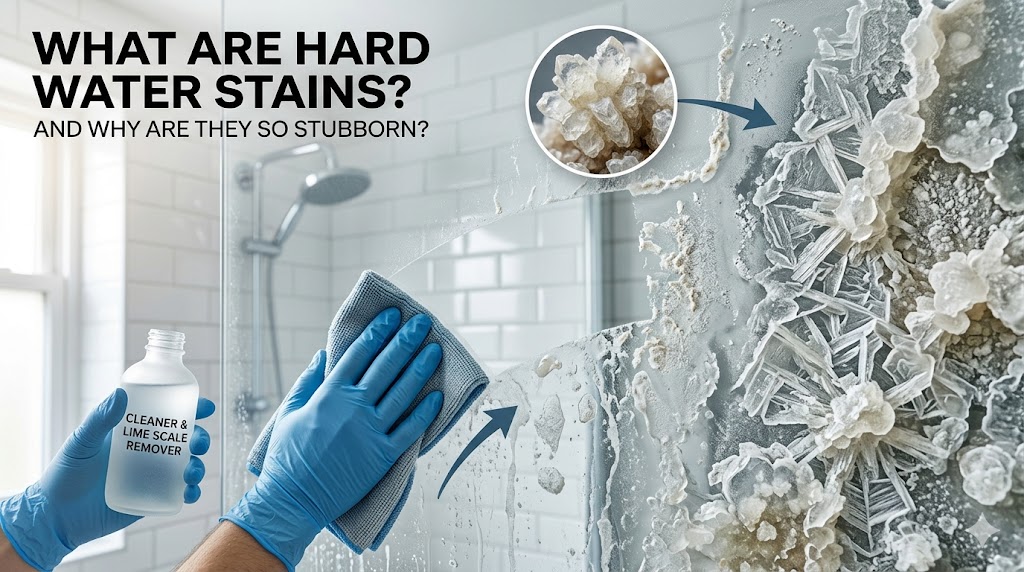
Hard water consists of an excess of minerals which are dissolved in the water like Calcium and Magnesium and when the water evaporates from surfaces such as glass, tile, faucets, basins, etc., it will leave a chalky white mineral deposit behind. Eventually, it builds up on these surfaces, creating thick layers of mineral deposits that create a strong bond to the surface and become nearly impossible to remove with normal cleaning products. The longer mineral deposits go untreated, the tougher they become to remove and that’s why you need to treat these deposits before your inspection.
Where to Look for Hard Water Stains
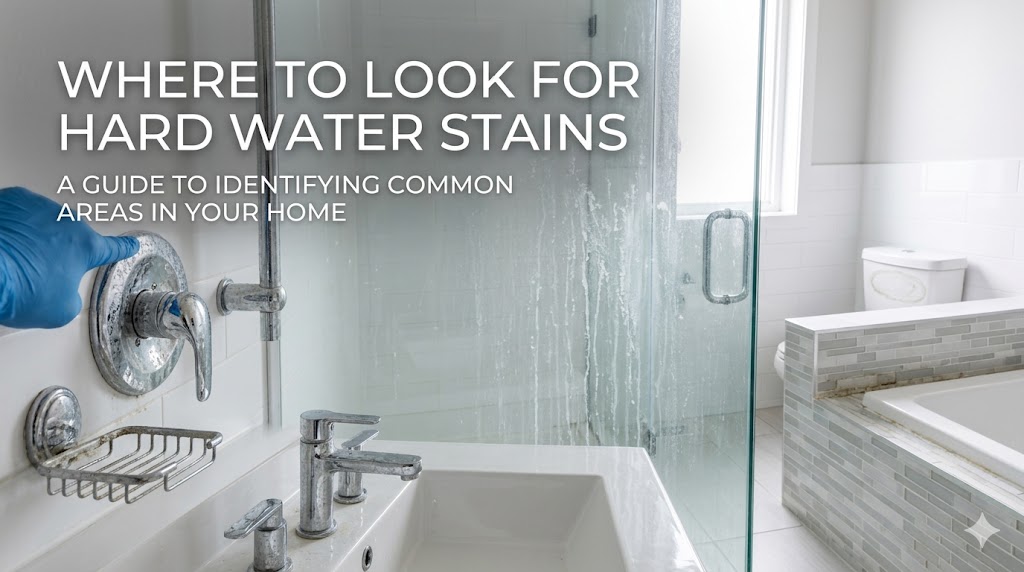
Assessing your home should be done prior to cleaning. Here is what to look for when inspecting your home:
- Showers and glass door or wall surfaces may have a milky residue.
- Some bathroom fixtures (i.e., faucets or shower heads) may have crusty deposits around their bases or holes.
- Bathroom sinks (and basins) may have residue rings or staining near the drain.
- Toilet bowls may contain rings that are either brown or white and positioned just below the waterline.
- Kitchen sinks (benches) may also contain excessive amounts of debris or buildup around the faucet.
- Tiles or grout may contain dull, chalky spots where water has been deposited.
Effective Methods to Remove Hard Water Stains
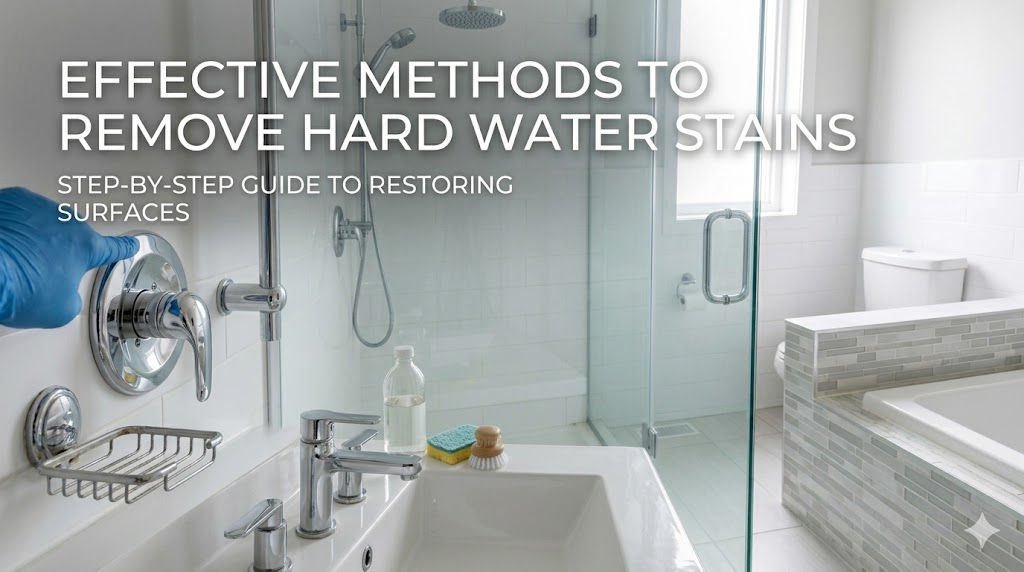
1. White Vinegar — Your Best Friend
Due to being low in acid, white vinegar can easily break down mineral buildup around your sink and faucet. To use white vinegar for cleaning a sink or faucet, do the following:
- Soak a cloth or paper towel in undiluted white vinegar and wrap it around the area of the faucet you wish to clean. Allow the vinegar-soaked cloth or towel to sit on the faucet for thirty to sixty minutes.
- To clean your glass shower doors, spray white vinegar directly onto the surface of the door and allow the vinegar to soak for several minutes before wiping it off with a non-scratch scouring pad.
- Be sure to rinse thoroughly with water after cleaning with vinegar.
Hint: If there are heavy mineral deposits on the sink or faucet, repeat the cleaning process, or leave the vinegar-soaked cloth on the faucet overnight.
2. Baking Soda Paste for Tough Deposits
If plain vinegar doesn’t work, then add some baking soda to give you some abrasion that won’t leave any scratches on surfaces.
- Make a paste by mixing the baking soda with a small amount of water or vinegar.
- Put the paste directly onto the area that has stains and scrub it gently with a soft bristle brush or cloth.
- Wait 10–15 minutes to let the paste sit before rinsing off.
This method is very effective at cleaning tile, grout and sink surfaces.
3. Lemon Juice for Glass and Chrome
Another way to naturally clean glass shower screens and chrome fixtures is by using lemon juice. Simply cut a lemon in half, and rub that half over the stained area; after doing so, rinse it off. The natural oils found in lemons will also help to create a slight sheen on your chrome fixtures.
4. Commercial Limescale Removers
If you’re dealing with a severe hard water stain or one that has been around for a while, you may want to use a commercial cleaner. You should choose a cleaner that contains either citric acid or phosphoric acid. Be sure to follow the directions on the cleaner, and check to be sure the cleaner is appropriate for the surface you’re using it on — many commercial cleaners will damage chrome or grout if they are left on too long.
5. Showerhead Soak
To clean a showerhead that has clogged nozzles due to mineral build-up, fill a plastic bag with white vinegar and tie it around the showerhead so that the nozzles are completely immersed in the vinegar. Allow it to soak for a few hours or overnight, then flush out the nozzles with water to remove loosened particles.
Final Tips Before the Inspector Arrives
- After cleaning, dry off any wet surfaces using a microfibre cloth so that no new water spots will form.
- To check for remaining streaks on glass screens, look for them in natural light and at an angle to reveal any residue.
- Under-rim staining on toilets is a common reason for not passing the inspection; so don’t forget about it.
- Once water has dried on taps, you will need to go back and re-clean them to make sure there are no drips or fresh spots left behind.
Conclusion
Finding ways to remove hard water marks does not need to be a last-minute disaster; there are effective techniques to remove the marks ahead of your inspection, so you can show a truly clean property and give yourself the greatest opportunity of receiving your full bond back.
If you have limited time or simply want reassurance, The Bond Cleaning Brisbane offers professional end-of-lease cleaning services that take care of all of your needs, including the hard water stains, so that you can go to your final inspection with total confidence.
FAQs
Can I use regular bathroom cleaner to remove hard water stains?
You can clean small areas of dirt and stains with some bathroom cleaning products, but they do not usually have enough acidity to remove mineral deposits. You will need something with an acidic solution (like white vinegar or lemon juice) to dissolve these built-up deposits from hard water. If you have been using a spray and wipe method, making the switch to vinegar should give you immediate results.
How long does it take to remove hard water stains from a shower screen?
When determining how to remove the stains from glass, you’ll need to take into account how long they’ve been on there — if you’ve just got some new crusty stuff on your window from bird droppings (or whatever), you should be able to get them off in 20 to 30 minutes of vinegar soaking. Conversely, if you want to remove stains that have been there for months, you may need to do this process two to three times to get it clear (or even leave the vinegar soaking overnight in some cases), so don’t rush through the process. Remember that patience will eventually yield your desired results.
Will vinegar damage my taps or chrome fixtures?
Chrome can usually be cleaned with white vinegar without any problem; however, do not let it soak for longer than an hour on metal surfaces because extending the time could easily dull that surface. Remember to rinse thoroughly with clean water and then wipe dry with a soft cloth after using a vinegar solution. For gold fittings and brushed nickel fittings, it is best to use a specific cleaner made for limescale removal from these finishes.
What if the hard water stains won’t come off no matter what I try?
When using vinegar, baking soda paste and a commercial solution to remove limescale, if those don’t work, then it’s possible that the stain has actually germinated into the glass or onto the surface of a more permanent manner, often seen in shower screens that have had little cleaning done for a long period of time. After exhausting all other means to clean the surface, if you still have significant limescale and films built-up, consider calling a qualified cleaning service. Professional cleaning services offer stronger products and the proper equipment, so that even very heavy accumulations can be cleaned without damaging the surface.